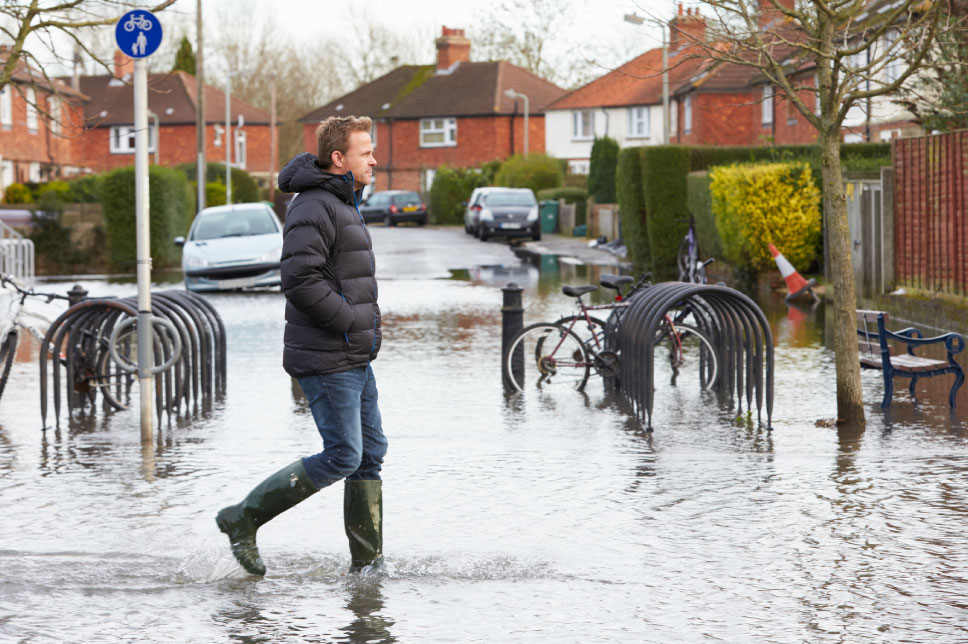
If your home is at risk of flooding, there are things you can do to be better prepared. Find out what actions you can take now, what you can do if a flood is forecast and what to do if your home is affected by a flood.
How to prepare for a flood:
- Keep up to date with weather and flood warnings on TV and radio. You can also check wind speed, rainfall and temperature in your area on the Met Office website, or check for flooding in your area.
- Have an evacuation plan. This can reduce the risk of injury to your loved ones and give you more time to save valuable items.
- Keep your important documents safe and dry. Store documents like insurance policies, passports, bank details and useful contact numbers in a dry place that’s easy to get to. Upstairs is best.
- Look after your tech. Place valuable and electrical items in high cupboards or take them upstairs to reduce the impact of any flood damage.
- Make a list of useful numbers you may need – your local council, the emergency services, the Environment Agency incident hotline (0800 80 70 60) and Floodline: 0345 988 1188.
If you have time before the flood hits:
- Only if it's safe to do so, check that drains and gutters are clear of debris so rainfall can drain away effectively – do not put anyone at risk of injury by carrying out these checks.
- Secure garden furniture and other items likely to float away. Bring them inside or lock them in a shed if you can.
- Buy and fit air-brick covers and flood boards to block doorways.
- Fully charge your mobile and all other mobiles in your home so you can be contacted in an emergency.
If your home is flooded and you need to make a claim
During times of severe weather, our phone lines can get very busy. If you need to make a claim with Direct Line, avoid the queue by using the Direct Line app or your online account. Here’s how:
- Sign in to your account online or in the app.
- Log your claim securely, step by step.
- Save details as you go.
- Add supporting evidence quickly and easily.
- Manage your claim in your own time.
- View repairer details and track progress.
You’ll need to check your policy documents for details of what your insurance covers.
Be prepared, stay safe
- Do not use electrical equipment or the gas supply until they have been checked by a qualified tradesperson.
- If you need to move to alternative accommodation because your property is flooded, check if the cost is covered under your insurance policy.
- Where possible, take photographs or videos of the damage as this may help with the settlement of your claim.
- Don’t throw away possessions without first checking with your insurer, as the items may need to be assessed.
- Your safety and wellbeing are our priority. If your home is affected by further flooding, put your safety first and contact your insurer as soon as it is safe to do so.
If you have a question or need more help, visit our help page.